
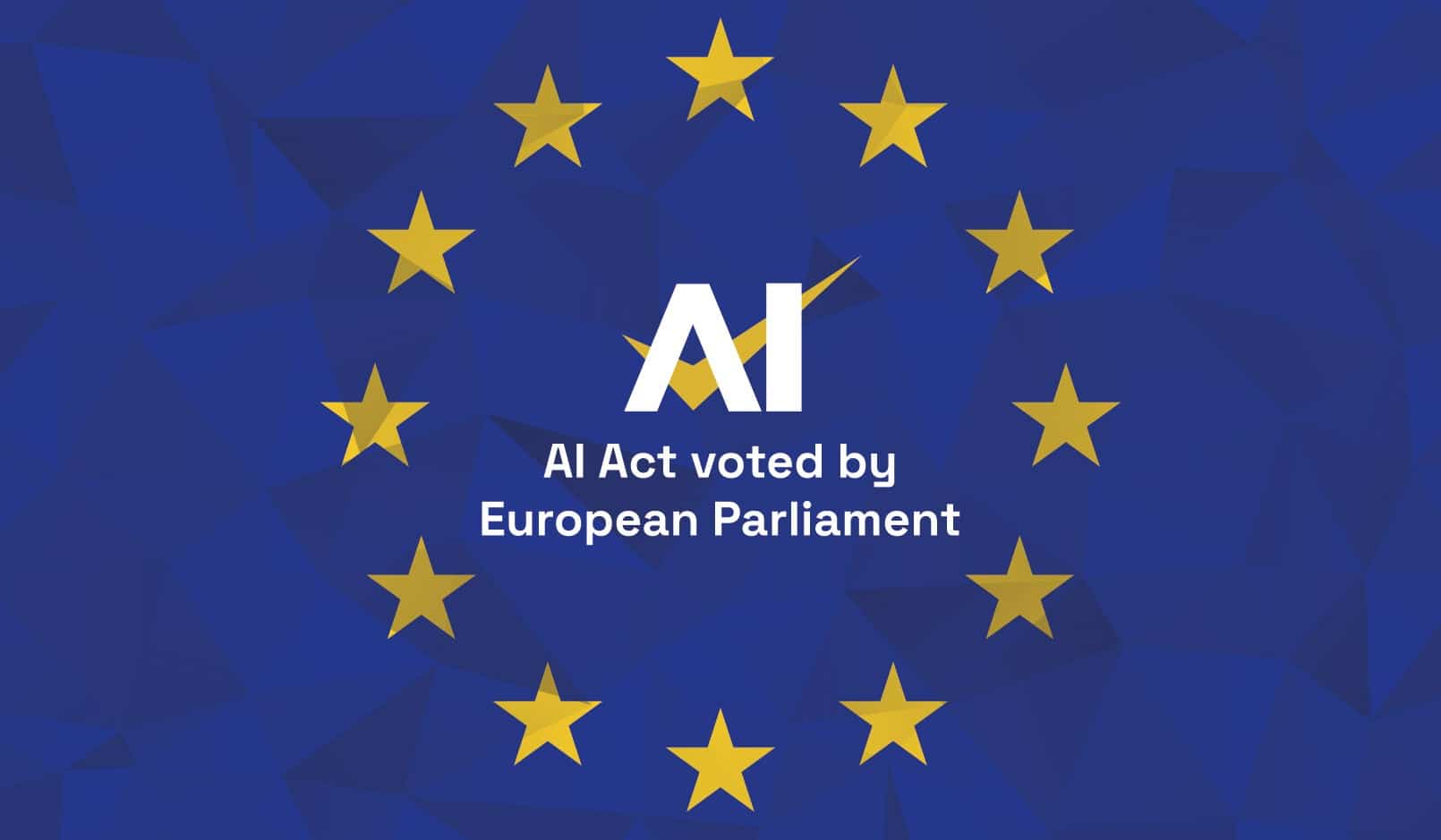
#¡Aprobado el AIAct!
El Parlamento Europeo acaba de votar a favor por abrumadora mayoría. La versión final en todas las lenguas de la UE está disponible en el marco de la enmienda 808, que es el texto acordado. Ese fue un paso, bastante rápido, para el Parlamento y un gran salto para Europa.
Próximas medidas:
Tras el acuerdo del Consejo, el Reglamento de Inteligencia Artificial se publicará en el Diario Oficial.
Un paso adelante
La pandemia ha acelerado la transformación digital: la transición �de la economía extractiva� al �nuevo espacio económicoel �economía digital �sucedió� como un salto. En este nuevo espacio, elalgoritmos� que ahora �configurar nuestra economía y nuestra sociedad� a menudo se desarrollan con �pocas restricciones legales y reglamentarias� o de tenencia común �sostenibilidad� y �ético�normas.� Por consiguiente, �garantizar que �las tecnologías se ajustan a nuestros valores compartidos� y existente �marcos jurídicos y reglamentarios� es crucial.
La UE parece ir más allá en este arduo miedo al esforzarse por crear una tecnología socialmente responsable y sostenible desde el punto de vista medioambiental, fomentando no solo un mercado fiable, sino también y, de hecho, especialmente un conjunto.ecosistema socioeconómico y biocultural seguro y transparente.
A saber, �el �texto actualizado más reciente� del Reglamento de Inteligencia Artificial de la UE incluye un �definición revisada de los sistemas de IA en consonancia con elDefinición de la OCDE.� y el �enfoque basado en el riesgo, �al evaluar la legalidad del desarrollo y el uso de sistemas de IA sobre la base del nivel de �riesgo para los derechos fundamentales.�Según el Parlamento Europeo, la Ley tiene por objeto garantizar que los derechos fundamentales, junto con la democracia, el Estado de Derecho ysostenibilidad medioambiental� están protegidos de la IA de alto riesgo, al tiempo que impulsan la innovación y hacen de Europa un líder en este ámbito.
Para un impacto elevado �IA de uso general� modelos con riesgo sistémico, las obligaciones son más estrictas. Si estos modelos cumplen criterios específicos, estarán obligados, entre otras cosas, a llevar a cabo evaluaciones de modelos, evaluar y mitigar los riesgos sistémicos, notificar incidentes graves a la Comisión, garantizar medidas de ciberseguridad, yinforme sobre su eficiencia energética.�
IA y sostenibilidad medioambiental
Desarrollo insostenible del sector digital�economía� en general, contribuye a causar daños medioambientales aparentes, tales como�Emisiones de CO2 que actualmente son aproximadamente equivalentes a las del sector de la aviación mundial�
En el �Sector de la IA, �espectáculos de investigación� que, por ejemplo, la formación de Chat GPT puede evaporar directamente 700,000 litros de agua dulce limpia, aunque esta información no se ha divulgado en gran medida. Y lo que es más importante, la creciente demanda mundial de IA podría dar lugar a un asombrosoEntre 4.2 y 6 600 millones de metros cúbicos de extracción de agua� de aquí a 2027. Para comparar, esto significa superar el �consumo anual de agua de países como Dinamarca.�
Además de lo pendiente �agua� Huella, de aquí a 2027, �Los servidores de IA podrían derrumbarse� un asombroso �134 teravatios/hora al año, rivalizar el �anual�consumo energía� de países enteros como �Suecia,� los Países Bajos, o� Argentina.�
Para abordar las cuestiones de sostenibilidad medioambiental, en virtud del Reglamento de Inteligencia Artificial, los LLM como ChatGPT entran dentro de los modelos que podrían considerarse responsables, entre otros, de �insostenibilidad medioambiental.� En concreto, tendrán quemitigar los riesgos medioambientales sistémicos� y �informe sobre su eficiencia energética.�
Para lograr una IA verdaderamente sostenible, es esencialabordaje holístico� no solo la huella de carbono o la huella hídrica, sino también, y de hecho, especialmente, los riesgos sistémicos para el medio ambiente y la sostenibilidad en general. A más tardar elconsideración de todos los aspectos de la sostenibilidad, podemos esforzarnos por garantizar queEl desarrollo y el despliegue de la IA minimizan su impacto medioambiental en múltiples dimensiones. Esto �planteamiento integral� reconoce el �interconexión� de diversos recursos medioambientales y la necesidad de gestionarlos de manera sostenible.�


 ES
ES  EN
EN  FR
FR